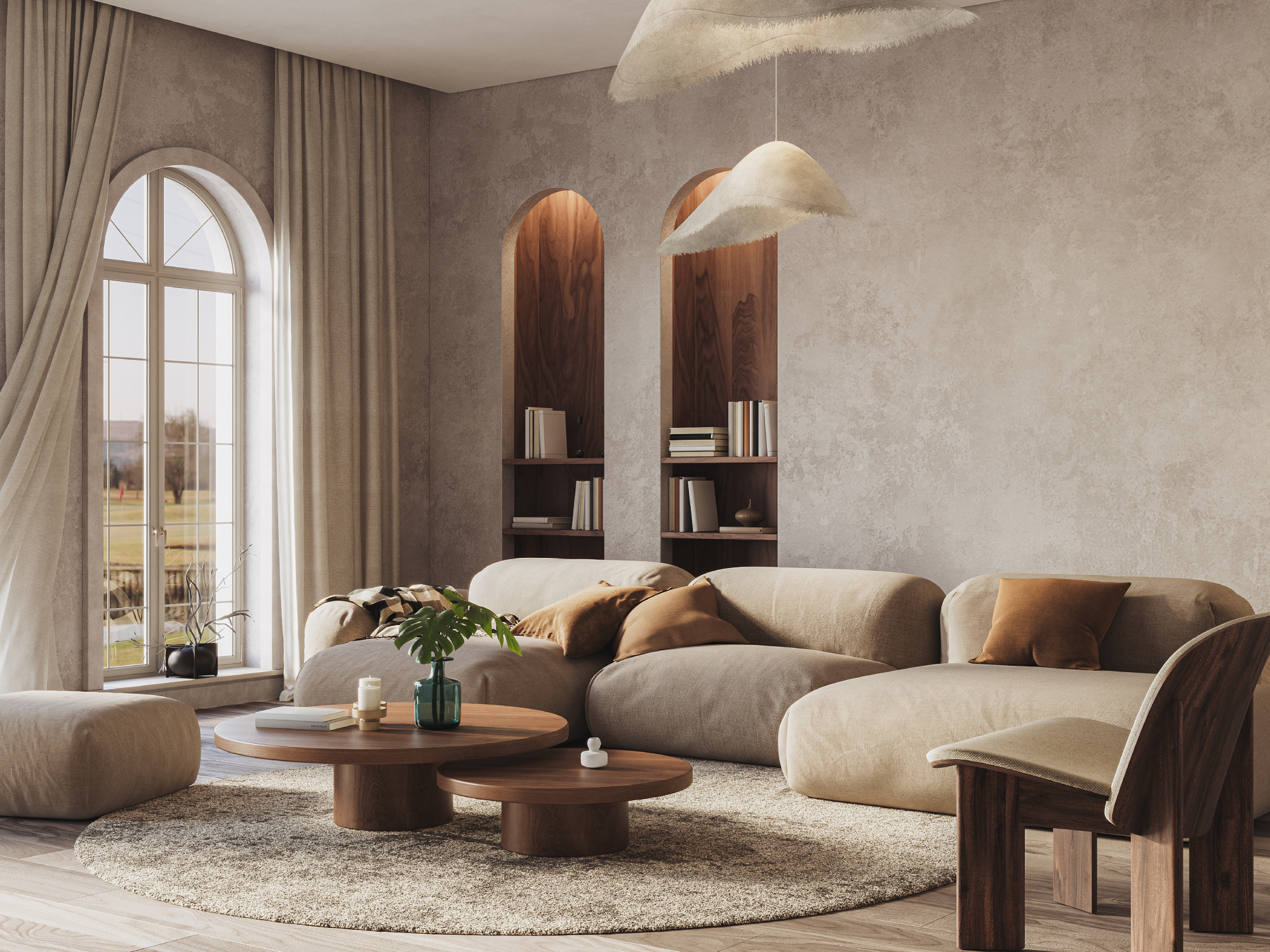
We step inside Britain’s luxury homes, and reveal the design secrets worth borrowing.
Behind the doors of a £5 million home, the luxury design rarely rests on one extravagant purchase. It is built into the bones of the property, the sweep of a staircase, the weight of stone underfoot and the way natural light moves across a room.
For this Luxury Home Report, we studied property listing imagery for homes valued at £5 million or more across the UK. The analysis considered their architecture, colour palettes, materials and features, before taking a closer look at the room most closely associated with retreat and ritual: their luxury bathrooms.
CONTENTS
- KEY FINDINGS
- THE LUXURY FEATURES SEEN IN MOST £5M HOMES
- WHY MODERN INTERIORS STILL MAKE ROOM FOR PERIOD CHARACTER
- NEUTRAL COLOURS RULE LUXURY HOMES
- STONE FLOORS AND LARGE-FORMAT LAYOUTS SHAPE HIGH-END INTERIORS
- INSIDE THE BATHROOMS OF BRITAIN’S £5 MILLION HOMES
- INSIDE CELEBRITY HOMES: THE FEATURES FAMOUS PROPERTIES SHARE
- HOW TO MAKE YOUR HOME LOOK MORE LUXE: FIVE DESIGN PRINCIPLES TO BORROW
- METHODOLOGY
KEY FINDINGS
Original period features appeared in over two-fifths (44%) of luxury homes
Followed by open-plan layouts and archways.
White or off-white was the most common wall colour
Visible in 61% of luxury properties, and terracotta was the preferred pop of colour.
Stone or stone-effect flooring was the most popular choice
In over half (52%) of the properties.
Built-in baths were slightly more common than freestanding baths
Suggesting built-in can be just as luxurious as freestanding.
Large-format tiling shaped the luxury bathroom look
Appearing on most walls and floors (78% and 77% respectively).
Marble was the preferred bathroom tile
Found in 54% of luxury homes.
THE LUXURY FEATURES SEEN IN MOST £5M HOMES
Before furniture, the building itself has already done much of the work in luxury homes. Original period features were visible in 44% of the sample, making retained character the biggest trend. Modern open-plan layouts followed, and archways rounded the top three.
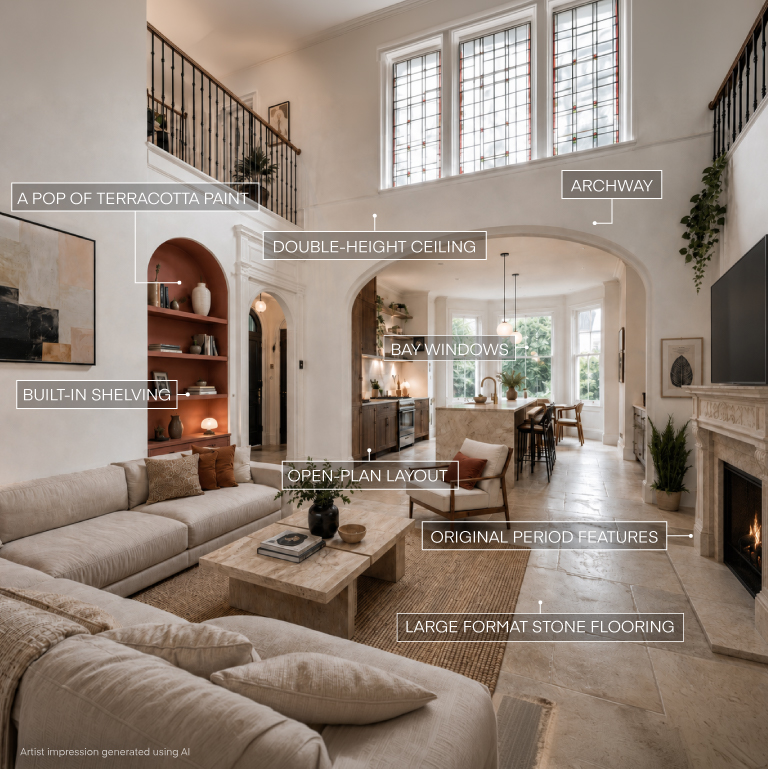
| Rank | Feature | Percentage of sample properties |
|---|---|---|
| 1 | Original period features | 44% |
| 2 | Open-plan layout | 31% |
| 3 | Archways | 27% |
| 4 | Built-in shelving | 22% |
| 5 | Skylights | 17% |
| 6 | Fireplace | 15% |
| 7 | Bay windows | 12% |
| 8 | Indoor pool | 11% |
| 8 | Sauna or spa | 11% |
| 10 | Double-height ceiling | 9% |
These results offer a clear design takeaway: keep the history that gives a room its identity, then edit the plan to fit modern life. An existing fireplace can anchor seating or symmetry, built-in shelving can follow the room’s lines and make storage feel integral, while archways soften the passage between spaces, and skylights bring daylight deeper into the room.
Purpose-built wellness spaces also form part of the luxury-home picture. Indoor pools appeared in 11% of the sample, as did saunas or spas. These rooms extend the idea of the home as a private retreat, giving exercise, recovery and relaxation their own setting.
This goes hand-in-hand with wellness trends becoming intertwined with residential design, something that has become more important for homeowners recently. Google Trends data shows UK searches for saunas in gardens rose by 40% year on year, alongside increases of 30% for home steam rooms and 20% for bathroom saunas.
“These features feel luxurious because they improve how a home looks and works. Period details give rooms character, while high ceilings, plenty of daylight and a layout that makes it easy to move between spaces help the home feel open and comfortable.
“The key is to build a design around the home’s strongest qualities. Keep finishes consistent, avoid overcrowding rooms, and make practical additions, such as storage, feel like part of the overall scheme.
Neil Thompson, Nôsa Showroom Manager
WHY MODERN INTERIORS STILL MAKE ROOM FOR PERIOD CHARACTER
| Rank | Interior style | Percentage of sample properties | Description |
|---|---|---|---|
| 1 | Modern/contemporary | 48% | Current high-end interiors with clean lines, modern furniture, sleek finishes, large glazing, open-plan layouts or contemporary architectural details. |
| 2 | Classic luxury | 29% | Formal/polished luxury styling, not necessarily period-specific. Often includes chandeliers, rich fabrics, grand furniture, marble, stone, decorative lighting or formal reception-room styling. |
| 3 | Neutral luxury | 24% | Understated high-end interiors with soft neutral tones such as cream, beige, taupe, pale grey, off-white, natural wood or stone. More “quiet luxury” than ornate luxury. |
| 4 | Traditional/period | 22% | Interiors where heritage or period features are the main focus, such as exposed beams, original fireplaces, sash/bay windows, cornicing, ceiling roses, historic panelling, stonework, or country house architecture. |
| 5 | Rustic/country | 1% | Rural/country-style interiors, such as exposed timber, farmhouse kitchens, stone floors, cottage-style finishes, earthy textures or country-style furniture. |
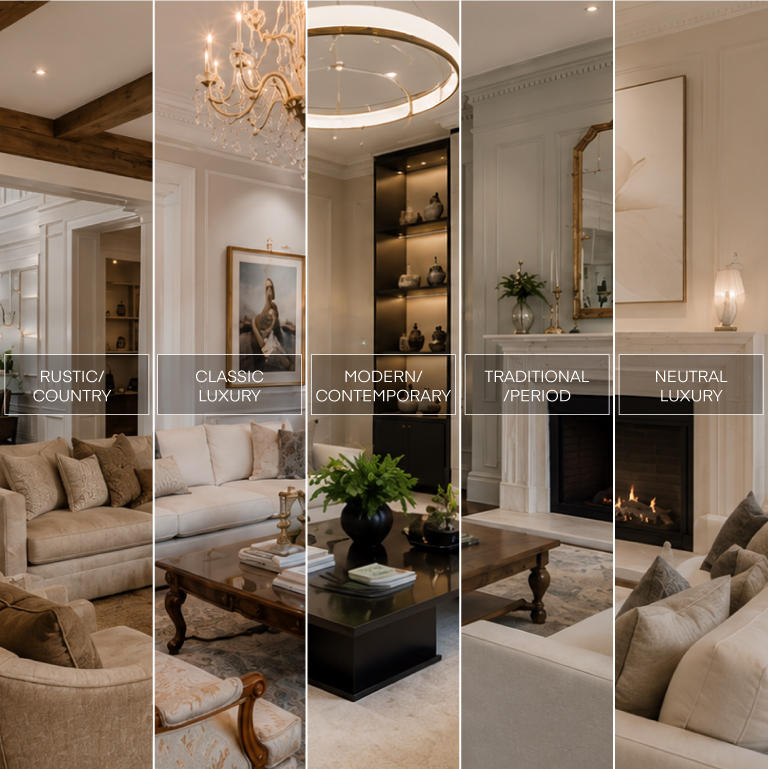
Modern or contemporary styling appeared in almost half (48%) of the sample, making it the most common luxury interior style. This is interesting when paired with the insight that original period features were also the leading architectural detail.
It suggests both can comfortably coexist within the same home. Cornicing, exposed beams and original fireplaces preserve the building’s character, while clean-lined furniture, modern lighting and large areas of glazing bring the scheme up to date.
NEUTRAL COLOURS RULE LUXURY HOMES
Colour is used with restraint across many luxury homes, our research finds. White or off-white appeared in almost two-thirds (61%) of the sample, followed by cream/beige in 28% and stone in 12%.
These colours create a simple backdrop for original features, furniture and natural materials, allowing wood grain and marble veining to stand out without making the room feel busy.
| Rank | Wall colour | Percentage of sample properties |
|---|---|---|
| 1 | White/off-white | 61% |
| 2 | Cream/beige | 28% |
| 3 | Stone | 12% |
| 4 | Terracotta | 7% |
| 5 | Taupe | 6% |
Terracotta, visible in 7% of luxury homes, was the most popular ‘pop’ of colour. Its earthy depth works well as a focused intervention in an alcove, across joinery, or in a smaller room, where the colour can feel enveloping.
STONE FLOORS AND LARGE-FORMAT LAYOUTS SHAPE HIGH-END INTERIORS
Stone or stone-effect flooring was the leading choice, visible in just over half of the homes analysed (52%). Its scale and natural-looking variation give quieter rooms a strong foundation, particularly where walls and furniture stay pale.
| Rank | Flooring material/type | Percentage of sample properties |
|---|---|---|
| 1 | Stone/stone-effect | 52% |
| 2 | Wood/wood-effect | 38% |
| 3 | Carpet | 29% |
| 4 | Tile | 8% |
| 5 | Marble/marble-effect | 2% |
Get the look with Nôsa’s Elche Limestone Hauteville Cream Porcelain Tile
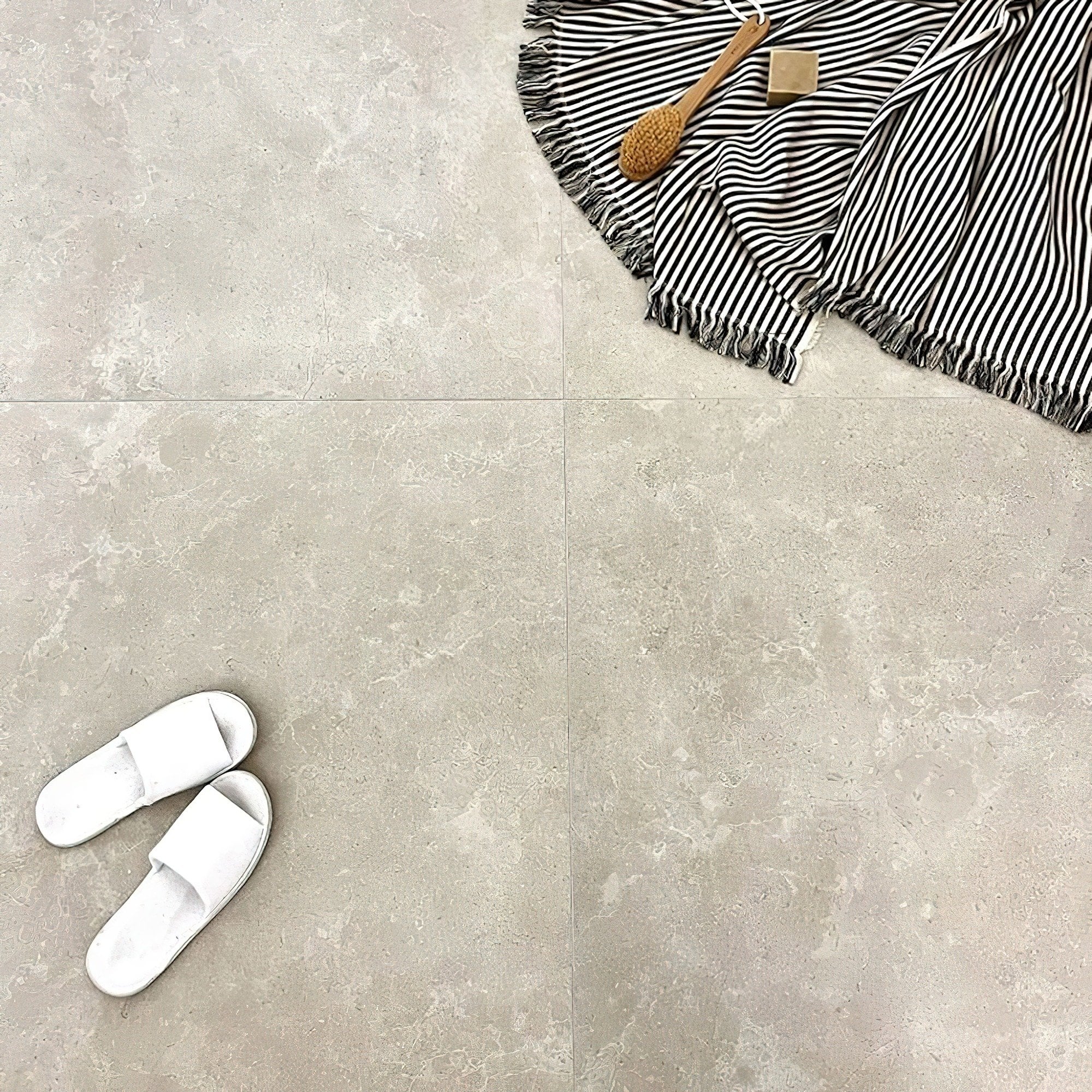
Wood or wood-effect flooring followed at 38%, while carpet was visible in 29%. Different flooring can help define how each room feels. Stone gives hallways, kitchens and open-plan spaces a clean, substantial base, while wood or carpet can make bedrooms and snugs feel cosy.
| Rank | Flooring Pattern | Percentage of sample properties |
|---|---|---|
| 1 | Large-format | 47% |
| 2 | Straight lay | 31% |
| 3 | Herringbone | 8% |
| 4 | Chevron | 3% |
| 5 | Graphic geometric | 2% |
The way flooring is laid also plays a crucial role in achieving a luxury finish, the research suggests, and large-format flooring was the most popular choice, recorded in almost half (47%) of the homes analysed. These expansive slabs can create a greater sense of presence from their sheer scale, and minimal grout lines give the illusion of a continuous flow.
“Large slabs create a clean, contemporary finish, while herringbone adds detail associated with traditional flooring. Large-format stone, stone-effect or porcelain tiles can give entrance halls, kitchens and open-plan living areas a more seamless, spacious feel. Fewer visible joints allow the colour and natural variation of the surface to take more of the attention.
“It’s why many of Nôsa’s tiles are large format because of their premium effect.”
Neil Thompson, Nôsa Showroom Manager
INSIDE THE BATHROOMS OF BRITAIN’S £5 MILLION HOMES
Luxury bathrooms are in our DNA, and our findings show that high-end design is as much about layout as finish.
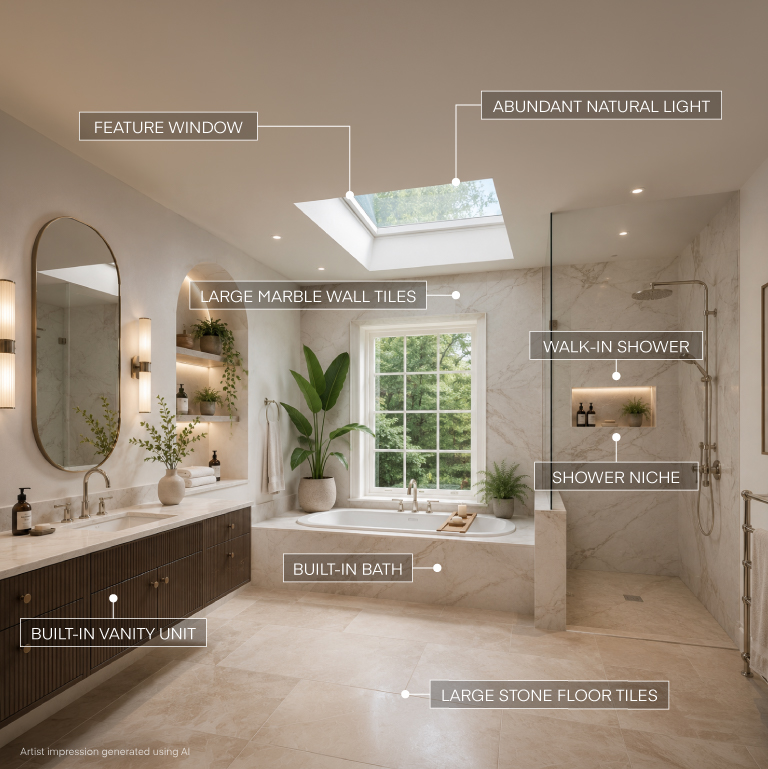
NATURAL LIGHT IS TREATED AS A DESIGN FEATURE
Natural light was a standout element in most luxury bathrooms, and almost three-quarters (73%) included a feature window, such as a large-scale window, floor-to-ceiling glazing, or prominent bay designs.
| Rank | Feature | Percentage of sample properties |
|---|---|---|
| 1 | Natural light | 85% |
| 2 | Feature window | 73% |
| 3 | Alcove | 62% |
| 4 | Plants or biophilic elements | 46% |
| 5 | Shower niche | 40% |
Alcoves were another common feature, found in almost two-thirds (62%) of luxury homes. These recessed areas give a bath, vanity, or shower a defined position and make better use of the available wall space.
Shower niches offer a smaller version of the same idea, with 40% incorporating storage for toiletries directly in the wall. Plants or other natural elements were visible in 46%, adding calming colour and breaking up hard surfaces such as stone, glass and metal.
BUILT-IN AND FREESTANDING BATHS EPITOMISE LUXURY BATHROOMS
Freestanding baths and built-in baths were the heroes of luxury bathrooms, appearing in most luxury homes.
| Rank | Bath type | Percentage or properties |
|---|---|---|
| 1 | Built-in | 50% |
| 2 | Freestanding | 44% |
| 3 | Inset | 2% |
| 4 | Spa bath or jacuzzi | 1% |
| 5 | Corner | 0% |
Built-in baths can sit neatly against a wall, beneath a window or within an alcove, often with a useful ledge for toiletries. Freestanding baths offer a more sculptural look and can become the room’s main design feature, particularly when positioned by a window or given a central place in the layout.
Get the look with Nôsa’s Vermont Freestanding Stone Bath
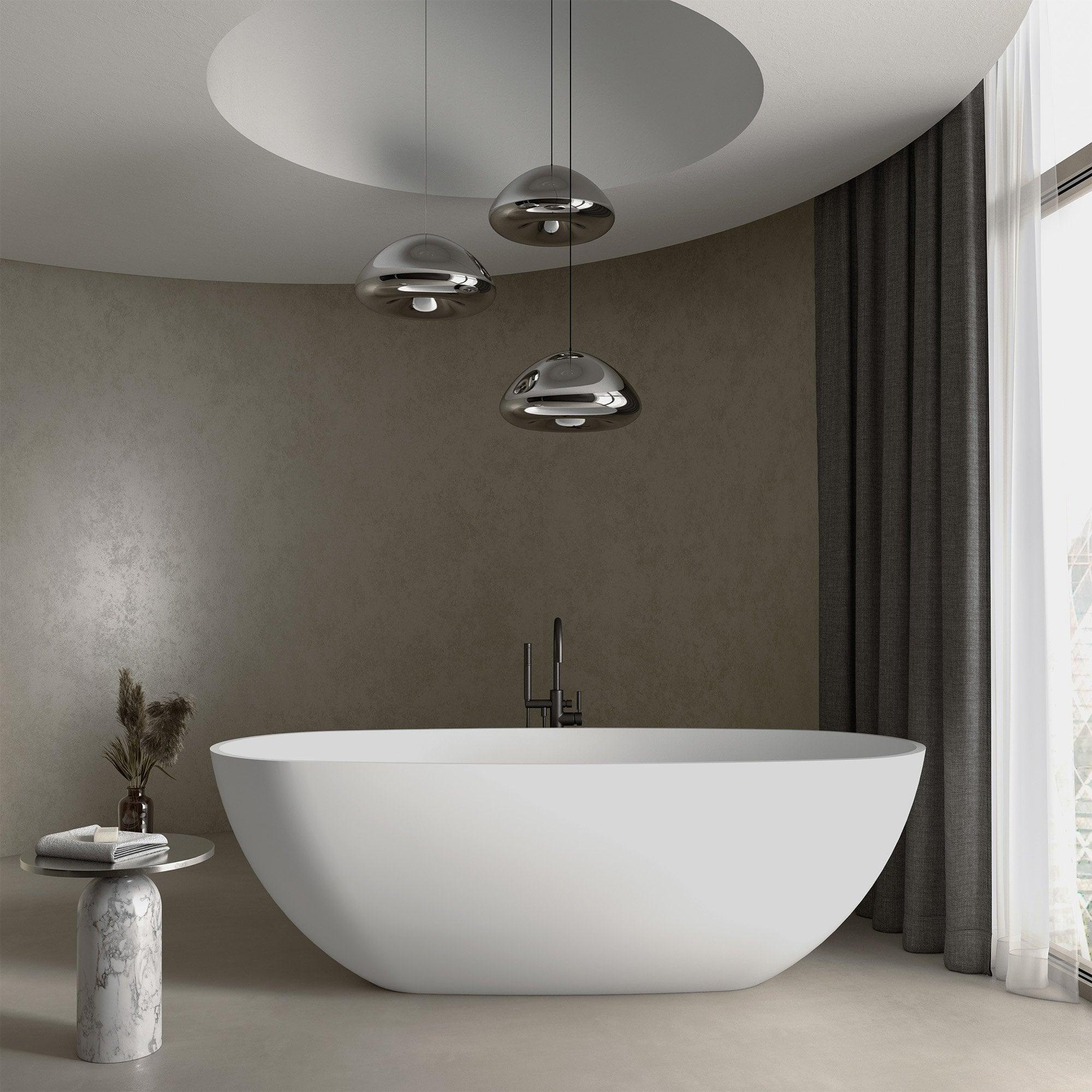
“A big misconception is that a freestanding bath is the only luxurious option. In reality, the best choice often depends on how you use your bathroom and how the space is laid out. A well-designed, fitted bath can feel every bit as premium as a freestanding model when it’s paired with quality materials and thoughtful styling. It’s about creating a bathroom that works beautifully every day.
“Stone baths should be planned into the room early because their dimensions and weight can affect access and installation. Mark out the footprint, check the delivery route and plumbing position, then ask the installer to confirm that the floor and proposed location are suitable.”
Neil Thompson, Nôsa Showroom Manager
SHOWER TYPES
| Rank | Shower type | Percentage of properties |
|---|---|---|
| 1 | Walk-in | 57% |
| 2 | Enclosed glass shower | 36% |
| 3 | Over-bath shower | 8% |
| 4 | Other | 3% |
| 5 | Wet room/open shower | 1% |
To accompany the bath, walk-in showers were the leading luxe choice, seen in 57% of homes, compared with 36% for enclosed glass designs. Their open entrance and minimal framing can make the bathroom feel larger and less divided. Clear glass, continuous tiling and a built-in niche also help keep the shower area simple and practical.
MARBLE AND STONE LEAD LUXURY BATHROOM TILES
Marble was the leading bathroom wall tile material, recorded in 54% of homes, followed by stone at 33% and limestone at 11%. The veining and organic colour variation in these surfaces add sophisticated detail to the walls that looks unmistakably high-end.
| Rank | Wall tile material | Percentage of properties |
|---|---|---|
| 1 | Marble | 54% |
| 2 | Stone | 33% |
| 3 | Limestone | 11% |
| 4 | Travertine | 6% |
| 5 | Slate | 2% |
| Rank | Flooring material | Percentage of properties |
|---|---|---|
| 1 | Marble | 45% |
| 2 | Stone | 43% |
| 3 | Porcelain/Ceramic | 29% |
| 4 | Wood/wood-effect | 12% |
| 5 | Microcement/concrete | 3% |
Get the marble look with Nôsa’s Clarence Gloss Smooth Ceramic Wall Tile
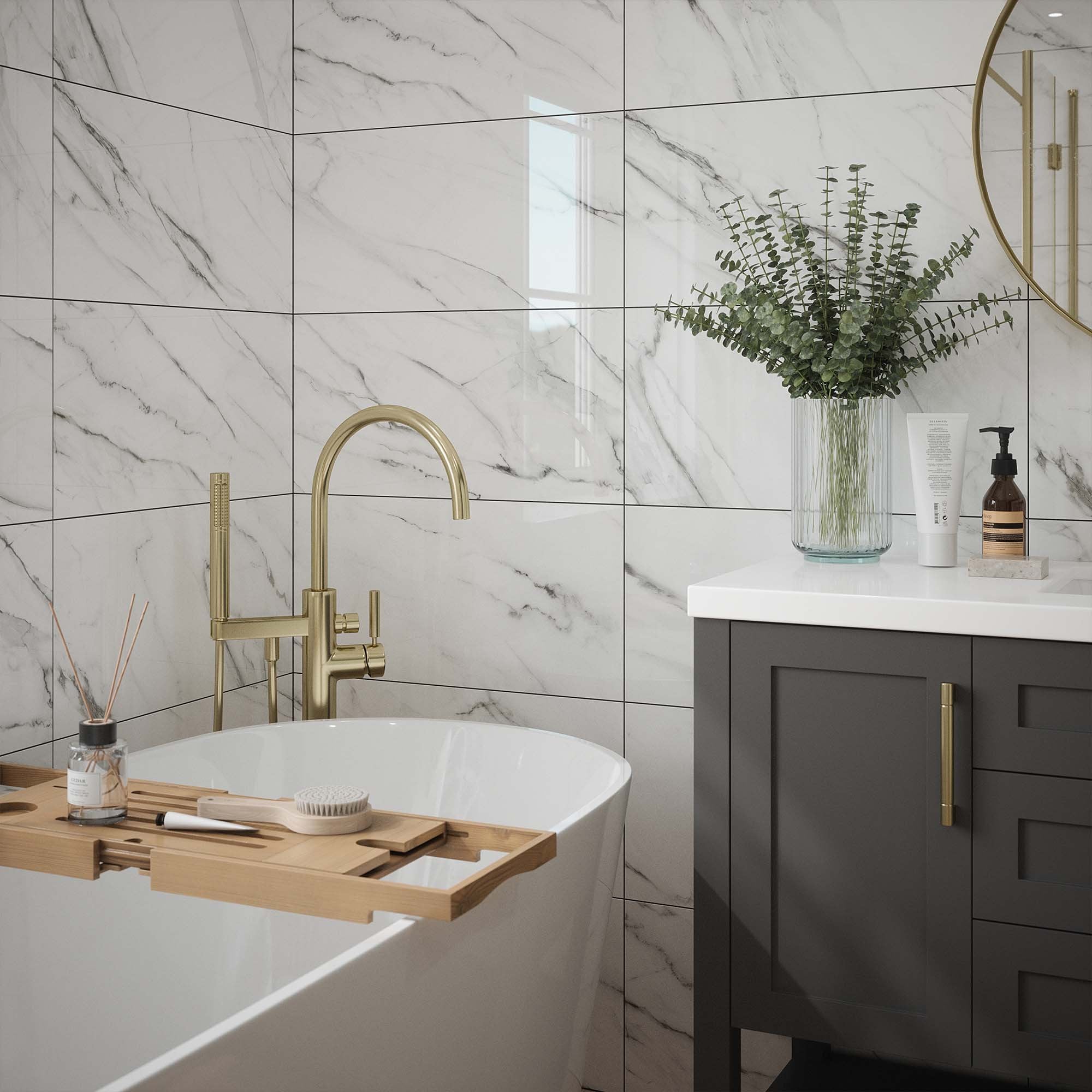
Marble and stone were almost equally common on bathroom floors, at 45% and 43% respectively. Porcelain or ceramic tiles followed at 29%. A simple floor layout gives the bath, vanity and fittings more room to stand out.
LARGE-FORMAT TILES CREATE A CALMER BATHROOM BACKDROP
Large-format flooring echoes throughout luxury homes, and its presence extended to bathrooms too. Almost four in five luxury bathrooms had large-format wall tiles visible (78%), and 77% had them underfoot.
| Rank | Pattern | Percentage of properties with these wall tiles | Percentage of properties with these floor tiles |
|---|---|---|---|
| 1 | Large-format | 78% | 77% |
| 2 | Straight lay | 16% | 26% |
| 3 | Mosaic | 6% | 3% |
Straight lay, where tiles are installed in a simple, even grid, was the second most common pattern, more popular in flooring than walls. Mosaic ranked third, although its share was much smaller at 6% and 3%.
NEUTRAL COLOURS LEAD, WITH BLUSH PINK ADDING WARMTH
All the bathrooms analysed shared a neutral colour scheme on their walls, with white or off-white and cream/beige the popular choices.
| Rank | Painted wall colour | Percentage of properties |
|---|---|---|
| 1 | White/off-white | 73% |
| 2 | Cream/beige | 18% |
| 3 | Pale grey | 4% |
| 4 | Stone | 4% |
| 5 | Taupe | 4% |
Among the more colourful options, blush or muted pink was preferred for paint (1%).
THE MOST COMMON VANITY AND SINK STYLES
| Rank | Vanity type | Percentage of properties | Basin/sink type | Percentage of properties |
|---|---|---|---|---|
| 1 | Built-in vanity | 53% | Undermount sink | 36% |
| 2 | Floating vanity | 31% | Integrated sink | 35% |
| 3 | Freestanding vanity/cabinet | 21% | Vessel basin | 22% |
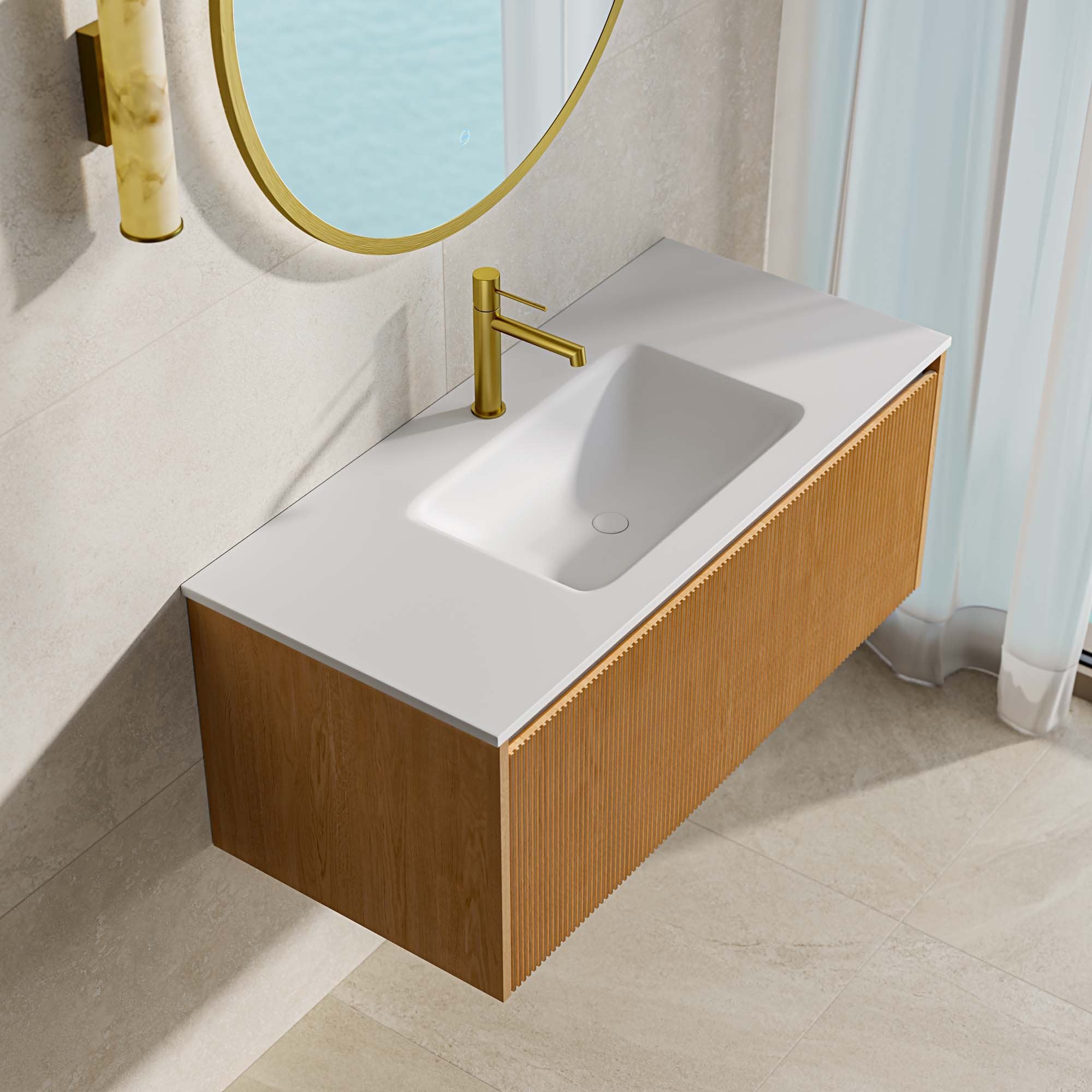
Luxury vanity units can make a statement with style. Built-in vanities were most popular, making use of the wall width and providing useful storage, which is especially useful in busy homes. These were complemented by undermount and integrated sinks, which preserve a clear, clean countertop line.
“A luxury bathroom vanity unit often acts as the visual anchor of the room, so its proportions should feel considered within the wider space. It should cover up to 30-50% of the wall width to look balanced.
“Your bathroom mirror also should be up to 90% of the width of the vanity unit, and when paired with wall sconces framing it either side, it creates a composed, symmetrical look often seen in high-end interiors.
“Practical details are just as important. Look for generous concealed storage to keep the countertop clear, and check that the basin depth, tap position and drawer layout will work comfortably together. In a smaller bathroom, a wall-mounted vanity can preserve more visible floor area and give the room a lighter, more spacious feel.”
Neil Thompson, Nôsa Showroom Manager
Get the look with Nôsa’s Capri Oak Vanity Unit with Stone Basin
CHROME AND SILVER LEAD BATHROOM FIXTURE FINISHES
| Rank | Fixture finish | Percentage of properties |
|---|---|---|
| 1 | Chrome/silver | 84% |
| 2 | Brass/gold-toned | 16% |
| 3 | Black | 7% |
Chrome and silver-toned fittings were the clear favourites, which pair easily with white, marble and stone surfaces seen throughout luxury bathrooms.
However, brass or gold-toned fittings are increasing in popularity as they subtly add warmth, while black is also becoming more popular in contemporary bathrooms as it creates a high contrast against white. Carrying the chosen finish across taps, shower controls, handles and accessories helps the room feel coordinated.
HOW LUXURY BATHROOMS COMBINE PRACTICAL AND AMBIENT LIGHTING
| Rank | Lighting type | Percentage of properties |
|---|---|---|
| 1 | Recessed spotlights | 73% |
| 2 | Wall lights/sconces | 14% |
| 3 | LED strip/cove lighting | 7% |
Recessed spotlights were the clear preference, providing even overhead light without adding more decorative fittings. Wall lights, like sconces, beside a mirror can provide focused lighting around the vanity, while concealed LED strips can introduce a softer glow beneath cabinets or inside niches.
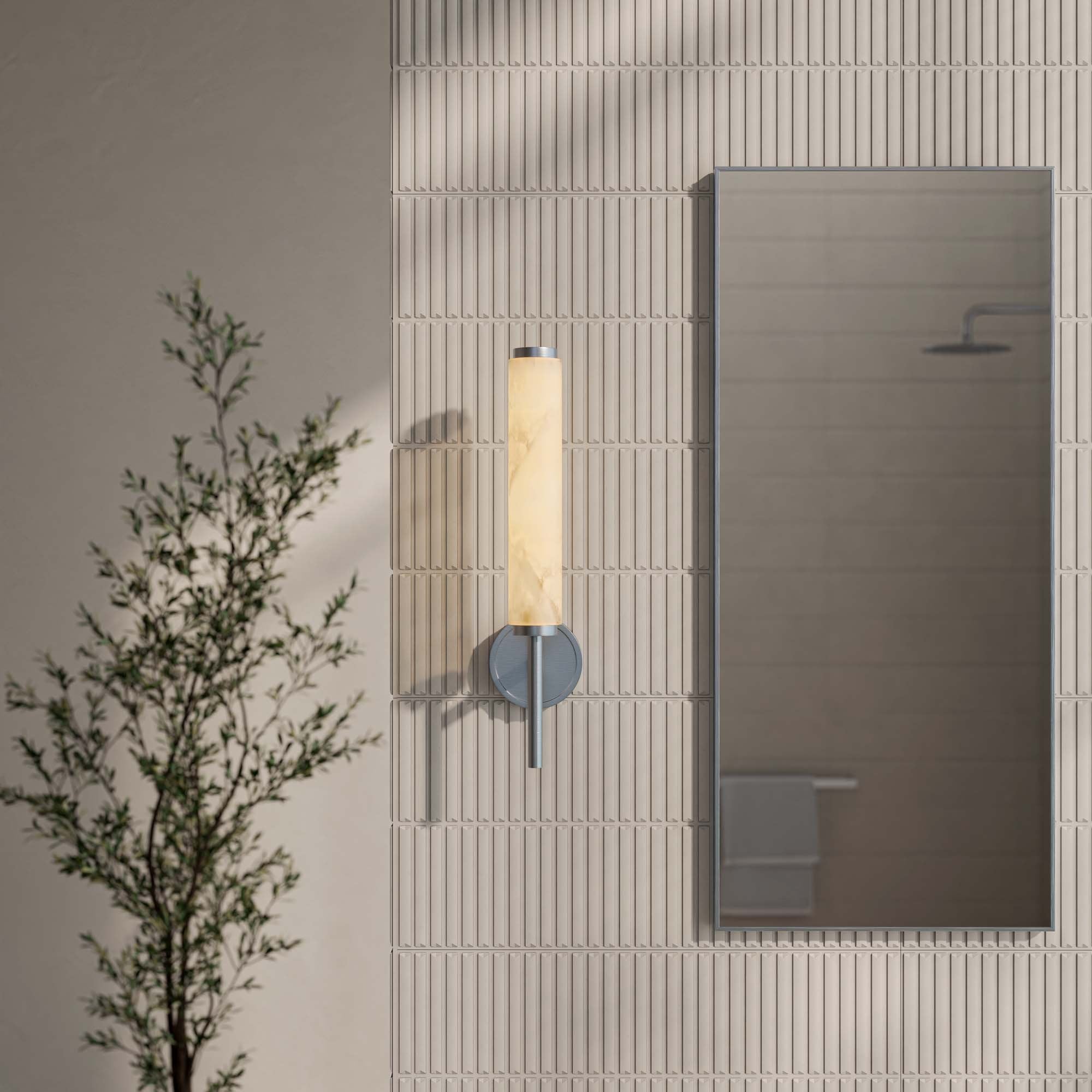
Get the look with Nôsa’s Orlo Alabaster Single-Column Brushed Nickel Wall Sconce
INSIDE CELEBRITY HOMES: THE FEATURES FAMOUS PROPERTIES SHARE
We also analysed a sample of current and former homes of the rich and famous, from the likes of Charli xcx to Graham Norton. Celebrity properties included many of the features found in luxury homes, but the order differed. Feature staircases became much more prominent.
| Rank | Visible home-wide feature | Percentage of celebrity homes |
|---|---|---|
| 1 | Feature staircase | 92% |
| 1 | Open-plan layout | 92% |
| 1 | Original period features | 92% |
| 4 | Built-in shelving | 85% |
| 5 | Fireplace | 77% |
| 6 | Bifold/sliding doors | 69% |
| 6 | Vaulted ceiling | 69% |
| 8 | Archways | 62% |
| 8 | Double-height ceiling | 62% |
| 10 | Exposed beams | 54% |
| 10 | Skylights | 54% |
Charli xcx’s Chelsea home used height and natural light to create impact, with a feature staircase and vaulted ceiling with skylights and bay windows. Original period details gave the mostly white interior character, while straight-laid wooden flooring kept the wider scheme simple.
Graham Norton and Sienna Miller’s homes shared a character-led mix of exposed beams, fireplaces, vaulted ceilings and archways. Graham Norton’s also featured a double-height ceiling and home library, while Sienna Miller’s opened up into a courtyard.
HOW TO MAKE YOUR HOME LOOK MORE LUXE: FIVE DESIGN PRINCIPLES TO BORROW
Some of the strongest ideas inside Britain’s luxury homes are also the easiest to borrow, without a full renovation.
These five design principles can be applied in any home and bathroom.
1. WORK WITH THE FEATURES ALREADY THERE
Restore an original fireplace rather than boarding it up, use an archway to frame the view into the next room, or fit shelving into an unused alcove. Retaining and embracing period features adds character without redesigning the whole space.
2. KEEP THE COLOUR SCHEME SIMPLE
Start with white, cream, beige or stone, then introduce terracotta, sage green or blush pink in one contained area. A painted alcove, or tiled niche, can add interesting colour without making the room feel busy.
3. CHOOSE ONE MAIN FEATURE
Give attention to a feature window, stone wall or statement bath, then keep the surrounding furniture and finishes simpler. Repeating one shape or finish elsewhere will help connect the scheme.
4. MATCH THE BATH TO THE ROOM
Built-in baths work neatly beneath windows and within alcoves. Freestanding baths can create a stronger focal point when positioned centrally or given space around their shape. Mark out the dimensions before deciding what style works best and where it should sit.
5. COORDINATE THE VANITY AND FITTINGS
Choose a vanity that provides the storage you need, then carry one metal finish across the taps, shower controls, handles and accessories. View finish samples in daylight and under the bathroom lighting before making a final choice.
METHODOLOGY
Nôsa is a luxury bathroom retailer for design-conscious UK homeowners, renovators, and interior designers.
Always interested in premium trends, we created the Luxury Home Report by focusing on properties listed at £5 million or above on Rightmove. Python was used to collect property listing URLs, before scraping available listing metadata including the price, location, listing descriptions, and image galleries.
The final dataset included 782 £5m+ UK property listings.
Luxury property features analysis
Listing descriptions were analysed to identify broader luxury home features where they were clearly stated. These were based on a fixed seed list of features. Results were aggregated at property level, meaning each property was counted once per feature, even if the feature was mentioned multiple times in the listing.
Bathroom image analysis
Property image galleries were downloaded, and a local image classification model identified bathroom-related images. The final sample was based on 921 confirmed bathroom images.
An AI image analysis model identified visible bathroom features against a fixed seed list. Only features visible in the image were counted.
The results were aggregated at a property level, meaning each property was counted once per feature, even if multiple bathroom images showed the same feature.
All results should be treated as visual classifications based on listing imagery, rather than confirmed material specifications.
All outputs were grouped into consistent categories. Similar and duplicate labels were combined where appropriate.
Home-wide image analysis
A separate sample of home-wide images, excluding bathroom images, replicated the above analysis to identify broader luxury home trends. The sample covered 1,000 images across 534 £5m+ UK properties.
Celebrity-home analysis
A separate editorial review was carried out using publicly available imagery from current or former celebrity homes. Images were collected from property listings and reputable editorial articles.
The final celebrity image set contained 214 relevant property images. An AI image-analysis model was used to identify visible bathroom and home-wide features.